Exposure bracketing is one of those techniques that photographers discover in two completely different contexts — some find it through HDR photography, others through the practical need to guarantee a correct exposure in fast-moving or high-stakes situations. Both are valid uses, and understanding when each applies will change how you approach difficult lighting conditions.
This guide covers what bracketing is, how to set it up on your camera, the different bracketing configurations available, and when to reach for it versus when a single well-exposed frame is the better approach.
This article is part of our Learn Photography guide.
→ See the complete Learn Photography guide
What exposure bracketing is

Exposure bracketing is the practice of capturing multiple frames of the same scene at different exposure values. Rather than committing to a single exposure and hoping it’s correct, you capture the scene at your intended exposure and at increments above and below it — giving you a range of exposures to choose from or combine in post.
The term “bracketing” comes from the military concept of firing rounds on either side of a target to establish its position. In photography, you’re bracketing the correct exposure on either side to ensure you capture it.
While many cameras also offer white balance bracketing and some — like the Nikon D850 — even offer automated focus bracketing, exposure bracketing is what most photographers mean when they use the term without qualification.
How exposure bracketing works
Bracketing can be performed manually by simply adjusting your exposure between shots, but most cameras offer an automated bracketing mode called Auto Exposure Bracketing (AEB) that handles the sequence automatically. In AEB mode, you configure two settings: the number of frames in the sequence and the exposure increment between them.
Most cameras offer bracketing sequences of 3, 5, 7, or 9 frames. A 3-frame bracket is the most common — one frame at the metered exposure, one brighter, one darker. The increment between frames is configurable, typically in 1/3-stop steps, with common options of 1/3, 2/3, 1, 2, or 3 stops between frames.

Most Canon cameras spread the bracketed sequence symmetrically around the current exposure — one stop under, the metered exposure, one stop over. Some cameras, including certain Nikon bodies, allow you to configure the sequence direction differently, capturing a range that is entirely brighter or entirely darker than your starting point. This flexibility is useful when you know your metered exposure is already pushing toward one end of the range you want to capture.
While most photographers bracket using shutter speed — which changes exposure without affecting depth of field or motion rendering — it’s also possible to bracket using aperture or ISO, and even with flash power if you’re working with strobe lighting.

The two main reasons to bracket
Insurance in critical situations
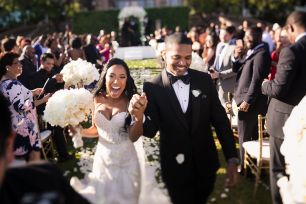
The first use of bracketing is purely practical: guaranteeing at least one correctly exposed frame when the stakes are high and reshooting isn’t possible. A ceremony first kiss, a wildlife subject in rapidly changing light, a motorsport moment — any situation where you get one chance and the lighting is uncertain enough that your metered exposure might be off.
In this context, bracketing is a safety net. You shoot the metered exposure plus one stop above and below, and sort through the sequence afterward to find the best frame. The overhead is a few additional files; the benefit is confidence that one of them will be right even if the meter was fooled by a tricky scene.
This type of bracketing typically uses a 3-frame sequence at 1-stop increments — enough coverage to catch metering errors without generating so many frames that culling becomes burdensome.
HDR blending and tone mapping
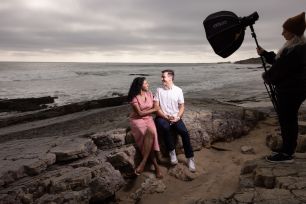
The second use is intentional image blending for high dynamic range results. When a scene exceeds what a single exposure can capture — bright sky over dark foreground, a window-lit interior, a landscape at high noon — bracketing captures separate frames correctly exposed for different tonal zones, which are then blended in post.

For HDR blending, a 3-frame sequence at 2-stop increments is a common starting configuration — dark, median, and bright exposures covering a 4-stop total range. More extreme contrast situations may call for 5 or 7 frames. The merged result retains highlight detail from the darker frames and shadow detail from the brighter ones, producing a final image with a wider tonal range than any single capture could hold.
For HDR bracketing specifically, shoot in Aperture Priority or Manual mode — not Shutter Priority. In Aperture Priority, the camera varies shutter speed between frames while keeping aperture constant, which maintains consistent depth of field across the sequence. In Shutter Priority, the camera varies aperture, which changes depth of field between frames and creates alignment problems when merging. For more on this, see our camera modes guide.
How to set up bracketing on your camera
The exact menu location varies by camera body, but the setup process follows the same logic across brands.
On Canon bodies: Find AEB (Auto Exposure Bracketing) in the shooting menu. Set the number of shots and the increment using the main dial. Enable the drive mode to continuous shooting so all three frames fire in a single burst when you hold the shutter button.
On Nikon bodies: Find BKT (Bracketing) in the custom settings menu or assign it to a button. Configure the number of shots and increment. Use continuous drive mode to fire the sequence in one burst.
On Sony bodies: Find Bracket Settings in the camera menu. Set the bracket type to exposure, configure the number of frames and increment, and use continuous drive mode.
Across all systems: use a tripod for HDR bracketing to ensure the frames align precisely for merging. Use a remote shutter release or self-timer to eliminate camera movement at the start of the sequence. For critical-moment insurance bracketing in fast action, shoot handheld and let continuous drive handle the sequence.
When not to bracket
Bracketing isn’t a substitute for learning to read exposure correctly. Shooting three frames of everything triples your file volume, fills cards faster, slows down culling significantly, and can make you lazy about dialing in the correct exposure in the first place. A photographer who understands their histogram and metering modes should be getting a correctly exposed single frame in most situations without relying on bracketing as a crutch.
Reserve bracketing for situations where it genuinely earns its place: scenes with dynamic range that exceeds what a single RAW file can hold, high-stakes moments where you can’t reshoot and the meter might be fooled, and deliberate HDR work where the blended result is the goal from the start.
For more on exposure, histogram reading, and dynamic range — the foundational skills that inform when and how to bracket effectively — see our guides on histograms, dynamic range, and metering modes. The complete Learn Photography hub covers all of these in sequence, and our Photography 101 Workshop includes practical bracketing exercises.
Frequently asked questions about exposure bracketing
How many frames should I bracket?
For insurance purposes in fast-moving situations, a 3-frame bracket is usually sufficient — one stop under and one stop over your metered exposure covers most metering errors. For HDR blending, the right number depends on the scene’s dynamic range. A moderately high-contrast scene is often handled by 3 frames at 2-stop increments. Extreme high-contrast scenes — direct sunlight with deep shadow — may require 5 frames. More than 5 frames is rarely necessary with current sensors, which have enough dynamic range that 3 frames at 2 stops typically covers the full range of most scenes.
What exposure increment should I use for HDR?
One-stop increments give you more overlap between frames and more total coverage with the same number of shots, but require more frames to cover a wide range. Two-stop increments are more common for HDR because a 3-frame sequence at 2 stops covers a 4-stop total range, which handles most high-contrast scenes efficiently. Three-stop increments are sometimes used for extreme dynamic range situations but can leave gaps between frames that make smooth blending harder. Start with 2-stop increments for most HDR work and adjust based on your results.
Should I use aperture or shutter speed bracketing?
Shutter speed bracketing is the standard for almost all applications. It changes the exposure without affecting depth of field, which keeps all frames in a sequence compositionally and optically consistent for merging. Aperture bracketing changes depth of field between frames, which creates alignment and blending problems in HDR work and changes the look of each frame in an insurance bracket. ISO bracketing is occasionally used but introduces variable noise levels between frames. Shutter speed is the cleanest variable to change between bracketed frames in nearly every situation.
Can I bracket with flash?
Yes. Flash bracketing varies the flash output between frames — useful when you’re testing flash-to-ambient ratios or ensuring the flash exposure is correct for a specific subject. Some cameras offer automated flash bracketing similar to AEB for ambient exposure. In manual flash work, bracketing is often done by simply adjusting flash power between frames — up and down half a stop from your intended output — to find the optimal flash exposure for a given setup before committing to a full shoot at those settings.
Is bracketing necessary if I shoot RAW?
Not always, but sometimes. Modern RAW files have significant shadow and highlight recovery latitude — often 3–4 stops of usable recovery in either direction from the metered exposure. In many scenes, a single well-exposed RAW file has enough dynamic range to hold the tonal information you need without merging multiple frames. Bracketing becomes necessary when the scene’s dynamic range genuinely exceeds what a single RAW file can capture — typically scenes with more than 10–12 stops of range between the brightest important highlight and darkest important shadow. Use your histogram to assess whether a single exposure is holding the range you need before defaulting to a bracketing sequence.
Related Articles to Bracketing Definition

5 Mountain Landscape Photography Tips for Stunning Results

Making Easy Work Of Common Exposure Blending Issues