

Setting up one directional off-camera flash with a shoot-through umbrella may be your go-to lighting setup for family formals, but what other ways can you light a group of people to create more drama or visual interest? Light alters the mood of a scene through modifiers, quantity, and color. Even with family photos, you should be using your additional light to depict a certain story or tone that matches the wedding’s overall aesthetic.
Here are three ways to light family formals that all follow a certain theme, whether it be editorial, bright and airy, or hard and dramatic light.
Family Formal Lighting Techniques: At a Glance
This guide covers three distinct approaches to lighting group photos at weddings, from subtle fill flash to dramatic editorial setups.
- Natural Light with Off-Camera Flash – Fill shadows while maintaining ambient light
- Dramatic Editorial Lighting – Create high-fashion style group portraits
- Composite Lighting in Photoshop – Light sections separately and combine in post
- Frequently Asked Questions – Common questions about group lighting
1. Natural Light with Off-Camera Flash
Photographing groups in the shade is ideally the best condition for photographers on a sunny day, but often there are shadows that need to be filled depending on the direction of light. A common issue we’ve come across when inspecting group photos is shadows beneath the eyes, usually originating from a lack of fill light. This happens because open shade still has a directional quality, typically coming from overhead or one side, and without proper fill, faces can look unflattering.


In this scene we filled the right side of the image with a Profoto B2 to reduce the shadows cast by the direction of sunlight. Using a softbox modifier, we were able to reduce the output of strong highlights and match the existing light to add a more diffused external light source to the scene.
Tips for Balancing Flash with Natural Light
The key to this technique is subtlety. You want your flash to act as fill, not as the primary light source. Start by metering for your ambient exposure, then bring in your flash at a lower power setting. A good starting point is setting your flash output about one to two stops below your ambient reading. This ensures faces are lifted without looking artificially lit.
Position your modifier at roughly a 45-degree angle from your camera position and keep it elevated slightly above eye level. This mimics natural light direction and prevents that “deer in headlights” look that frontal flash can create. For larger groups, you may need to pull your light back further and increase power to ensure even coverage across all subjects.
[REWIND: IDEAL LIGHTING FOR LARGE GROUP FAMILY PHOTOS INDOORS]
2. Dramatic Editorial Lighting


Creating interesting shadow falloff and using hard light are common characteristics of high-fashion photography. This style works particularly well for bridal parties and smaller family groups where you want images that feel more like magazine spreads than traditional posed photos. Applying those attributes to a group family photo warrants close inspection of several things:
- Where do the shadows fall? If the shadows cast from the light fall on other subjects’ faces, alter the placement of your light to solve this issue. Pay attention to how taller subjects might cast shadows on shorter ones beside them.
- What type of modifier do I use? We want more specular highlights for high-fashion, editorial style lighting, so using a silver surface of some sort will help create that type of light. For the shot above we used the Profoto Deep Medium Umbrella in Silver with a Profoto B1. The deep umbrella shape helps focus the light and creates more controlled spill.
- What camera settings do I use? Depending on how dramatic you want to go, aim for a darker ambient light exposure and use your added light to chisel out your subjects. This is up to personal preference, so there are no standard camera settings to abide by, but play around with what works for your scene and try to consider the existing lights overhead. Generally, underexposing your ambient by one to two stops gives you room to sculpt with your flash.
Positioning for Editorial Group Shots
The placement of your light relative to your subjects makes all the difference in editorial photography. For groups, position your light at a steeper angle than you would for standard portraits. This creates more dramatic shadows across faces and adds depth to the overall image. Keep your light source relatively close to the group for harder shadows with quicker falloff, or move it further away for a slightly softer but still dramatic look.
Consider the background when setting up editorial shots. A darker or more textured background helps your dramatically lit subjects pop, while a bright background can fight against the mood you’re trying to create. If shooting outdoors, position your group so that any distracting elements fall into shadow.
3. Composite Lighting in Photoshop
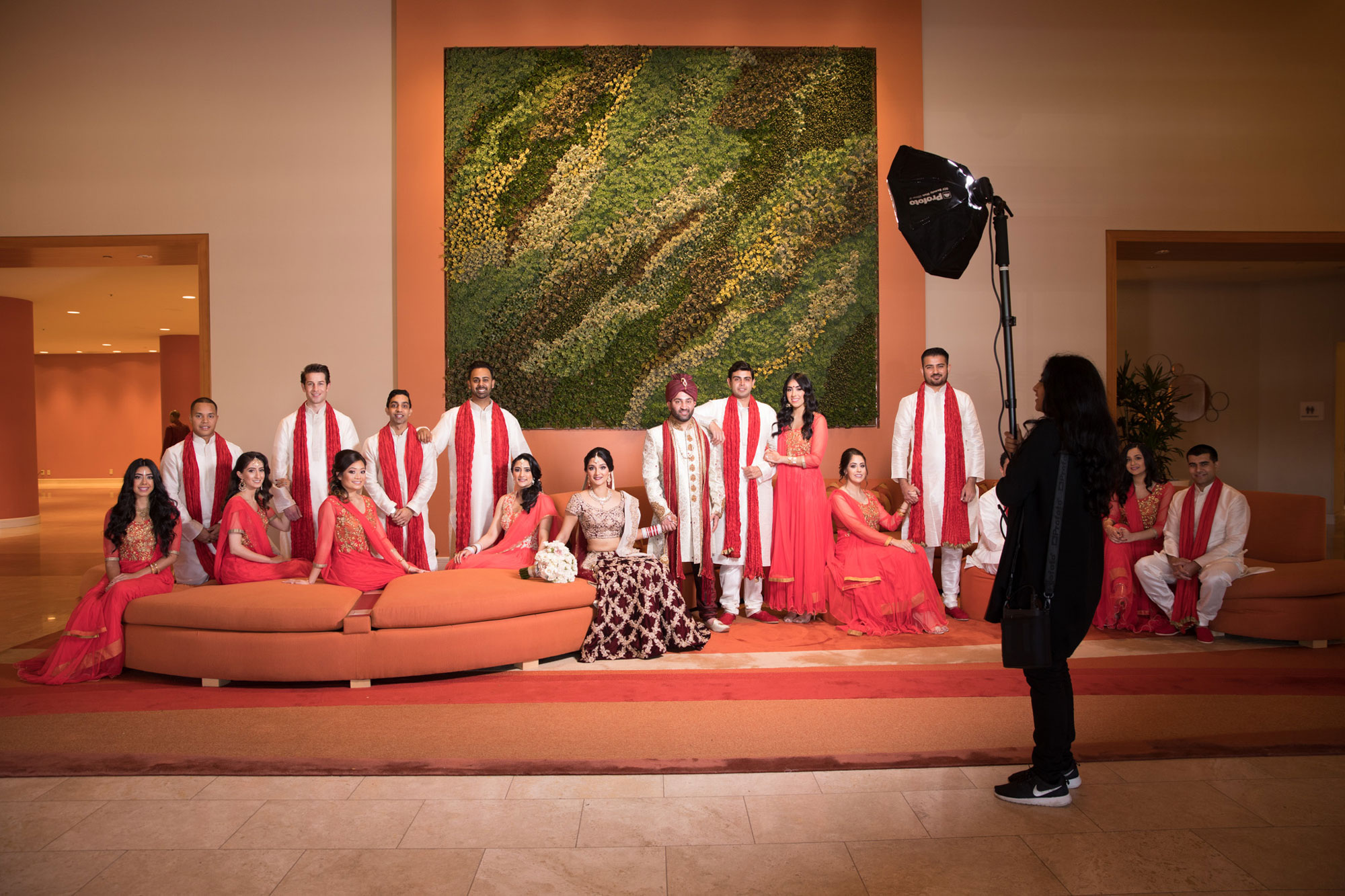
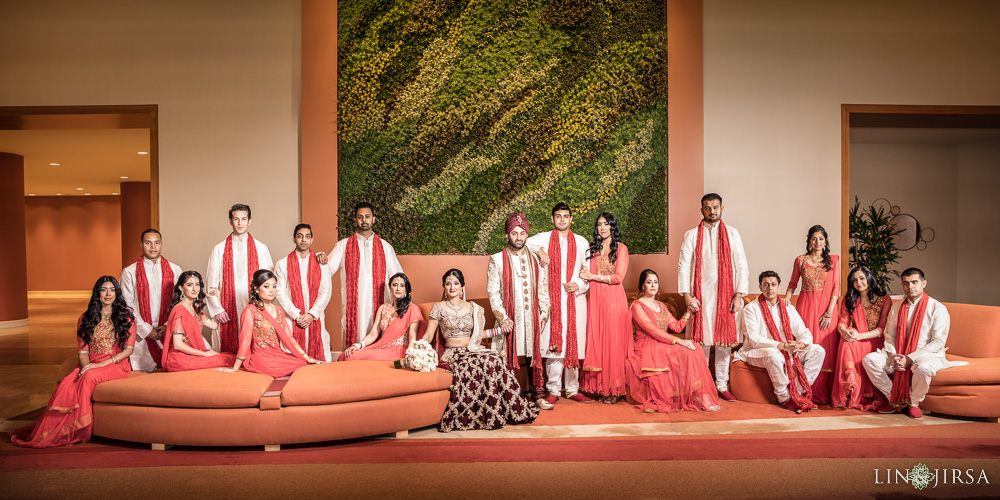
This is definitely one of the more challenging techniques of the bunch, but will most likely be the biggest crowd-pleaser. Have an assistant light small portions of the group so that you can composite them together in Photoshop to yield a fully lit group. Always take a plate shot without the subjects to mask any unwanted details or distracting items from the shot. See another example of Photoshop composite group lighting here!
Another point to note when shooting these types of images indoors is the existing light. More often than not, you will be overpowering your subjects with your external strobe or flash as to avoid mixing light. This gives you complete control over the quality and direction of light on each person.
How to Execute Composite Group Lighting
Start by setting up your camera on a sturdy tripod since alignment is critical for clean composites. Lock down your exposure settings in manual mode and disable autofocus after achieving your initial focus. Any shift in camera position or exposure will make compositing exponentially harder.
Have your assistant move through the group with your light, illuminating two to three people at a time while you capture each pass. Overlap your lighting coverage slightly to ensure no one falls into a dark gap between exposures. In Photoshop, stack your images as layers, then use layer masks to reveal the best-lit portions of each frame. Blend the edges carefully where lighting overlaps to avoid harsh transitions.
Example Settings and Final Result
Frequently Asked Questions About Family Formal Lighting
What flash power should I use for large group photos?
For large groups, start around half power and adjust from there based on your distance and modifier. Larger modifiers like umbrellas spread light more evenly but require more power to maintain proper exposure. If you’re filling shadows outdoors, dial back to quarter power or less so the flash complements rather than overpowers the natural light.
How do I avoid harsh shadows when lighting groups?
Harsh shadows typically come from placing your light too close or using a small, undiffused source. Increase the size of your modifier relative to your subject distance for softer shadows. Position your light higher and further from the group to reduce shadows cast by one person onto another. For very large groups, consider using two lights from opposite angles to fill shadows on both sides.
Can I use on-camera flash for family formals?
While on-camera flash works in a pinch, off-camera flash gives you far more control over shadow direction and light quality. On-camera flash produces flat, frontal lighting that can look harsh and create red-eye. If on-camera flash is your only option, bounce it off a ceiling or wall to create a larger, softer light source.
What modifier works best for group photography?
Large shoot-through umbrellas are popular for groups because they provide broad, even coverage and are quick to set up. For more control and slightly harder light, silver or white reflective umbrellas work well. Softboxes offer the most controlled light but may not cover large groups as evenly without being positioned further away at higher power.
Conclusion
Master off-camera lighting for large group photos with these tricks and see how we accomplish these shots in our Unscripted BTS workshop, part of our Premium membership! Whether you prefer subtle fill light that enhances natural conditions, dramatic editorial setups that make a statement, or composite techniques that give you complete control, expanding your lighting repertoire will set your family formals apart from the standard flash-and-go approach.


