Remember the movie Inception, where the story unfolds inside a dream within a dream, and by the end your mind was completely blown? The concept of a world nested inside another world is actually a helpful metaphor for one of the most powerful compositional tricks in photography: the frame within a frame. Including a frame within a frame in your composition can transform a flat, forgettable snapshot into a compelling work of art that draws viewers in and keeps them looking.

In Chapter 5 of Photography 101, Pye teaches compositional tips for creating great images, and framing ranks among the most impactful of those principles. Today, we’re going to talk specifically about including a frame within a frame in your composition and explore creative ideas for doing so with 10+ real-world examples.
So what’s the big deal with the frame within a frame? Framing your subject can strengthen the focal point, add texture and interest to an otherwise flat image, help tell a story, provide balance to the composition, and add depth to a scene. These are the qualities that set a creative artist apart from someone who simply records light. Below, we’ll walk through each technique with examples from talented photographers who’ve mastered the approach.
Frame Within a Frame Photography: At a Glance
This guide covers the most effective ways to use the frame within a frame composition technique, with real examples from working photographers.
- Secondary Subject in Foreground – Use people to frame your main subject
- Framing with Windows and Doors – Classic architectural framing options
- Organic Framing – Natural elements for softer compositions
- Framing Ceilings as Leading Lines – Architecture that directs the eye
- Archways as Frames – A classic framing technique
- Bokeh and Foreground Elements – Soft, creative framing with blur
- Curtains and Fabric – Textured framing through soft materials
- Creating Depth – How framing adds dimension to a scene
- Framing with Color and Texture – Trees and tonal contrast as frames
- Frame and Reflection – Combining framing with reflected elements
- Frame Within a Frame Ideas – Quick-reference list of framing elements
Secondary Subject in Foreground

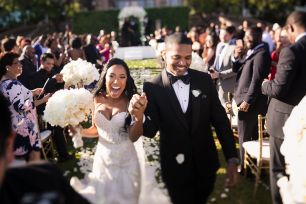
In this image, photographer Nicole Chan uses the arm of her secondary subject in the foreground to frame the primary subject in the background. The groom is also being framed by the partial arch of the doorway behind him, creating a layered effect. There’s no question what the focal point is here. Your eye goes right where it’s supposed to go, and then you have room to look around and absorb the story being told: a groom seeing his bride for the first time. Very well done.
Using a person as a framing element is especially powerful in storytelling photography because it creates a sense of perspective. The viewer feels like they’re observing a private moment from just over someone’s shoulder, which adds emotional weight to the image.
Framing with Windows and Doors

Jason Guy of Jason Guy Photography spotted this cathedral while walking around in Hawaii with his sister for her wedding photos, and they popped in to grab a few shots in front of this window. Great choice. Windows and doorways are always excellent options for framing because they’re designed by architects to draw the eye inward. In this case, the pattern on the floor tiles, the window structure, and the building’s architecture are all working together to frame the bride.
Notice how subtle the framing is here. Since the image is very low contrast overall, the framing acts more as texture and structure rather than a bold visual statement. That’s worth remembering: framing doesn’t have to be glaringly obvious to be effective. Sometimes the most elegant compositions are the ones where the framing quietly guides your eye without calling attention to itself.
Organic Framing

In this image from Lin and Jirsa, the couple’s reflection is framed by lily pads in a pond. Organic material tends to produce a softer, more natural-looking frame than windows or doorways, which can feel especially fitting for outdoor or nature-based sessions. The irregular shapes of natural elements also prevent the composition from looking too rigid or contrived.
The key takeaway here: look around you. Framing opportunities exist in almost every environment. Leaves, branches, flower petals, tall grass, water, and rocks can all serve as framing elements when you train your eye to see them that way.
Framing Ceilings as Leading Lines

Here’s another example from Lin and Jirsa. In addition to using the doorway to frame the couple, the architectural elements of the walls, the ceiling, the light fixtures, and the light source itself are all creating a frame within a frame within a frame. Every line in this image points toward the couple. That’s the power of layered framing: when multiple elements work together, the focal point becomes almost magnetic.
When shooting in ornate indoor spaces, train yourself to look up. Ceilings with beams, vaulted arches, or chandeliers can function as powerful leading lines that drive the viewer’s eye straight to your subject.
Archways as Frames

Archways are a classic architectural framing element, and it’s easy to see why photographers are drawn to them. The curved shape naturally draws the eye inward, and the contrast between the shadowed arch and the light falling on the subject creates a second layer of framing that reinforces the focal point. In this image, that interplay of light and shadow does as much compositional work as the arch itself.
Bokeh and Foreground Elements

Creating soft bokeh in the foreground is one of the most creative and visually interesting ways to frame a subject. The blur adds depth without competing with the focal point, keeping the viewer’s attention where you want it. You could shoot through tree leaves, use glass or crystal elements, shoot through fabric or lace, or try what Pye does and spray a little water on your lens for a painterly, dreamlike effect.
The key to this technique is using a wide aperture (f/1.4 to f/2.8) so the foreground element blurs into smooth, unrecognizable shapes. The closer you can get the foreground element to the lens, the softer and more abstract the bokeh framing will be.
Curtains and Fabric

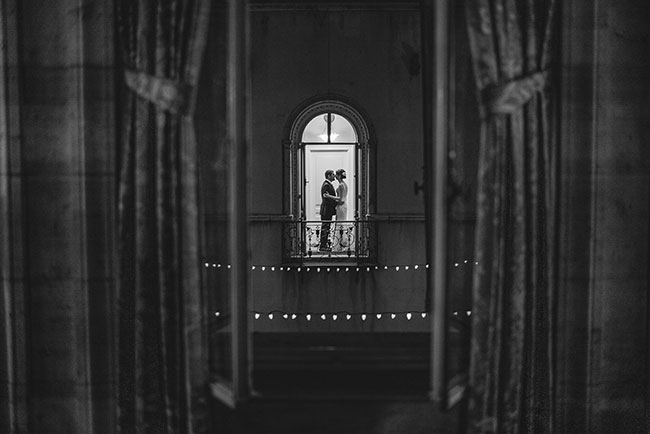
Shooting through curtains or fabric is a great way to add a soft, intimate quality to a frame within a frame composition. The texture of the fabric adds visual interest to the edges of the image while naturally leading the eye to the subject at the center. Sheer fabrics work especially well because they let in enough light to keep the frame subtle rather than overwhelming the scene.
Creating Depth


Here are two examples from Jay Cassario of Twisted Oaks Studio that illustrate exactly why this technique matters. The first shot is perfectly fine. The second has significantly more depth and visual pull. The frame within a frame adds more to the story and draws you in without distracting you from the focal point. It’s a great side-by-side demonstration of what’s at stake with this compositional choice.
Framing with Color and Texture

Trees are consistently excellent framing elements, and this image by Michael Kinney shows why. The branches frame the couple while the overall color and tonal contrast in the scene reinforce that framing even further. When asked how he chooses framing for his images, Michael put it perfectly: “It’s really all about finding a place to put the couple where lines don’t intersect their heads, but go around them. Finding space in the middle of chaos.” That’s a mindset worth adopting as your own.
Frame and Reflection

Here’s another shot by Michael Kinney, and this one stacks multiple techniques at once. The couple is framed by the circular cutout in the wall, the rectangle of architecture behind their heads, the broader structure of the room, and the dark shadowed tile area around the perimeter of the image. Add in the reflection, and you have a truly layered composition. Four distinct frames, plus a mirror image. See how much depth and visual interest that creates? This is what happens when you train yourself to see framing opportunities everywhere in a scene rather than settling for the most obvious one.
Frame Within a Frame Ideas
Here’s a quick-reference list of elements you can use to create framing in your images. This is by no means exhaustive. Just look around you and find what you can use within your composition to frame your subject. Finding a double or triple frame within a frame will add even more depth and interest to your image.
- Archways
- Bridges
- Doors
- Windows
- Mirrors
- People
- Ceilings
- Bokeh
- Curtains and fabric
- Fireplaces
- Multiple nested frames
- Light and shadow
- Organic material
- Negative space
- Reflections
- Color and tonal contrast
Frequently Asked Questions About Frame Within a Frame Photography
What is the frame within a frame technique in photography?
Frame within a frame is a compositional technique where you use elements in your scene, such as doorways, windows, arches, tree branches, or even other people, to create a secondary frame around your main subject. This draws the viewer’s eye to the focal point, adds depth and dimension to the image, and can help tell a more complete story within a single photograph.
Why does frame within a frame improve a photo?
The technique works because it gives the viewer’s eye a path to follow. When elements in the foreground or edges of the scene surround your subject, attention is naturally pulled inward toward the focal point. It also adds layers to the image, making a flat, two-dimensional photograph feel like it has genuine depth and dimension. On top of that, a strong frame often contributes to the story the image is telling.
What are the best natural elements for frame within a frame compositions?
Tree branches, leaves, lily pads, tall grass, rock formations, and flowers are all excellent natural framing elements. Organic frames tend to feel softer and more relaxed than architectural ones, which can work beautifully for outdoor portraits and environmental photography. The key is to look for shapes that wrap around your subject without intersecting awkwardly with their head or body.
Can you use bokeh as a frame within a frame?
Yes, and it’s one of the more creative approaches to the technique. By positioning a foreground element close to your lens and shooting at a wide aperture (f/1.4 to f/2.8), you can blur that element into smooth, abstract shapes that frame your subject without competing with them. Common approaches include shooting through leaves, lace, fabric, glass, or even water droplets on the lens for a painterly effect.
How do you find frame within a frame opportunities on a shoot?
Train yourself to arrive at a location and scan the environment before placing your subject. Look for doorways, arches, windows, overhanging branches, and gaps in structures. Also look for light and shadow patterns, since the contrast between a bright subject and a darker surrounding area can act as a frame even without a physical element. Once you start seeing in frames, it becomes second nature to find them everywhere.
To learn more incredible composition tips, check out our comprehensive beginning photography course, Photography 101. You’ll learn how to approach a scene, how to light, how to pose, how to expose, and how to compose amazing shots like the ones we’ve reviewed here.